Monday, May 21, 2007
El Salvador and Costa Rica
We left El Salvador with a brand new coat of paint under the boat and they waxed the hull for an extra $40 so we look very shiny and clean.
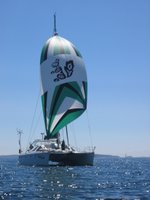
We had a two day passage to Costa Rica when we actually had one of our nicest sailing days for a long time. Consistent winds, we have had to motor so often on this journey that we wonder if we should have bought a motor boat!!! The turtles, who had replaced the whales from earlier on the trip were gradually replaced by leaping manta and eagle rays. When we first saw one we couldn’t figure out what it was, as then as we saw more and more we realized they were young rays. They leap about six feet in the air and do somersaults and flips, often doing three or four in a row. It is quite amazing, apparently they breed in Costa Rica and are born in January. Obviously the parents, who can be up to eighteen feet wide then take off as these are all between two and five feet and are often in schools.
Ken caught a beautiful dorado which he had right to the steps of the boat when it got away!!! He is not having much success landing his catches lately—lost his second swordfish when we were crossing the Tehuantapec!!
We arrived in Bahia del Coco which is a “point of entry” for Costa Rica. It is a run down touristy town which seemed to be inhabited by a lot of young people hanging out, apparently drugs are fairly prevalent. We had been warned about theft from cruising boats in the towns so had already decided to spend our time in Costa Rica in the small secluded anchorages.
The big advantage was the grocery store!! Pesto, kalamata olives, procuito, imported cheeses and swiss chocolate!!! Philo pastry—ah spanikopita and struedel!!! Oh and my ongoing issue, black lipton tea!!!—oh I have Roz bringing me down some—oh well it will be put to good use. Mexico had wonderful food, fruit, vegs and seafood with tasty fresh salsa but the chocolate was disappointing to say the least—did buy some chocolate one time which was Polish in the hope that it would be good but Poles should stick to sausage!!! We never did discover what Guatemalan’s eat as most restaurants were international wherever we were and when we went to what the Lonely Planet said was a typical restaurant it was chicken and fries??? In El Salvador pupusas were the local specialty and they are a flattened filled and grilled tortilla—similar to a perogy. The ones with just cheese are really bland but the ones where they add ground pork fat were very tasty if not cholesterol raising!! The salsa was replaced with pickled cabbage which did not rival the salsas of Mexico.
The check in was easy and we headed back to Bahia Santa Elena. This is a lovely bay bordering on a national park which is the largest dryland forest stand left in Costa Rica. The dawn and dusk brought flocks of parrots squawking as they flew overhead and the howler monkeys, which we had discovered in Guatemala are a fact of life in all of the forests here. We went ashore and has a hike up into the forest, came across a group of students doing their masters degree in wildlife. They were feeding hermit crabs papaya and observing them—we did note after they had gone the hermit crabs were devouring the papaya but are not sure what you can read into such a fact—they are hungry?? or perhaps just like papaya?? Anyway had a fun visit with them, they are from all Central American countries so I think it is an effort to instill the preservation of the wildlife into their cultures. We got to practice our Spanish and them their English.
In the evening we kayaked up a small river which runs into the bay, the evening as well as predawn is raucous and quite amazing. The next day we had a great snorkel and walk on nearby beaches.
Our next stop was ten miles further and we had a couple of days at the Murcielagos Islands. The snorkeling here was amazing and Ken collected scallops which we had for dinner. There were some young men diving for lobster and we were hoping to buy some from them but they didn’t seem to get any when we were there. The anchorage is in a lovely bay where the leaping mantas were all around our boat. Apparently the young are bred here and the adults who get up to 25feet wide must go to sea and leave the young who were anything from 2 to 4 feet wide in the inner waters to mature. We did see some when we snorkeled as well as a multitude of other fish. The water was very clear which was great as this coast is usually no where near as clear as the Caribbean side. There was a reef and we were treated to a great display of a pod of rays who were jumping—it looked like popcorn popping as each would jump in coordination with their buddies.
After a couple of days in this area we headed back to another small anchorage with a great jungle river trip which we took at dusk.
We then headed up the coast to another beautiful anchorage. Perhaps the prettiest yet, one of the beaches is being developed into an eco tourist resort which will be lovely when finished. We met some fishermen who took us up the hill to their friend’s house—he had a shack in this lovely bay with a few animals which he had penned and tried convincing us he was a preservationist—anyway they were all very friendly and we explored up the hillsides, now is gardenia season and they are lovely with a wonderful fragrance in the evening. They sold us some red snapper which we had for dinner.
We then had a long day up the coast to the next anchorage which although was open to the swell was stunningly beautiful. As we have to meet Bob and Roz in a few days we had to leave in the morning and had another long day to our next destination.
We finally arrived at Isla Tortugas, another beautiful bay in between two islands. Clear water and of course the water temperatures are such that even I—as my nearest and dearest can attest need to be tepid at least—can go in insnatly. The air is very hot and is lovely to plunge in and enjoy. We traded some calamari with some fisherman in the bay—I have a recipe for salt and pepper squid so will be fun to try.
Next morning we went to a nearby bay to Curu Nature Reserve for the day. It was amazing—as the pics show. Saw three varieties of monkeys, birds and butterflies—the last are very difficult to photograph as they insist on fluttering by but there were so many varieties. It is lushly forested and was definitely worth spending the day there. Saw a crocodile in the stream who proved to be the master of camouflage—see pic!!!
Costa Rica is definitely the most beautiful place we have been. It is lush and green with hills arising from the sea and gorgeous beaches all along the coast. There are more animal and bird species here per square mile than any other one country in the world. The biggest issue is the petty crime and in the towns cruisers are unable to leave their dinghy’s on shore after dark as someone will steal the oars or motor. It is too bad that the towns have not figured out how much money they lose by cruisers deciding to bypass Costa Rica to go straight to Panama. We know of a number of boats who took this option—Jack and Judy being one. We would have had we not agreed to meet Bob and Roz and we are glad we did come but we are avoiding the towns and only going into the smaller villages. When tourism is your major industry and the number of cruisers who are traveling the western Pacific coast are at an all time high they really should address it.
Mexico has figured it out and there are huge numbers of cruisers who spend years up and down the coast of Mexico—one of the questions they would ask us is how many seasons we had been in Mexico. Ours was amongst the few boats which only spent one. The Mexican culture and people are their greatest resource and they are so friendly, happy and full of fun that you can’t help but feel safe and comfortable. Their rich history, frequent festivals and even just Sunday night at the local town square where all of the families congregate to finish their week are so warm and colourful.
Anyway I will send this off in Quepos where we will meet Bob and Roz and I will no doubt have more stories to tell after visiting and traveling with them.
Part 2
Well I went into the internet place in Quepos but for some strange reason we could not hook up our computer so here is the next installment of Costa Rica.
Costa Rica continues to astonish us with it’s amazing lushness and beauty, everywhere we go we encounter wildlife and birds everywhere.
Quepos where we met Bob and Roz was a nice little town which had some nice restaurants, I bought a beautiful wooden bowl in rosewood. The wooden handicrafts given the magnificent rainforests are wonderful. They are planting trees to cut now as they have become very conscious not to continue to cut the virgin rainforest. After restocking we continued to a lovely small anchorage in Manuel Antonio Park. Dingied ashore and explored the gorgeous beaches—we are able to swim off the boat everywhere which is great after the sometimes suspect of the cleanliness of the water near Mexican towns. The whole coast is a series of beautiful white sandy beaches, coconut palms along the beach and behind the rainforest stretches up to the mountains which rise to the clouds. At night as the season is getting closer to the “wet” thunderstorms are occurring most evenings, so far they are mostly up in the mountains so we have not had an issue. We have had some rain later in the day which reminds us that we cannot stay too long in this part of the world and need to continue to Ecuador as anywhere north will have major thunder and lightening by July and we do not want to be amongst the 2% hit each year!!!
After a day there we continued down for two days at Uvita, another lovely beach. Had an interesting spit which you could walk out for a mile, it was very cool watching the sea come in from either side closing it up as you retreated. Came across a local man on the beach who was husking coconuts which he obviously shipped to a market to sell. He willingly got us down some yellow ones, cut the top off with his machete and we enjoyed the cool juice.
Our next stop was at Bahia Drake. This is a remote part of the coast which is isolated and it is 3 hours in a high clearance 4 wheel drive vehicle from the nearest highway if the rivers are not up too much. Tourists fly in and out and it is the most remote park in Costa Rica, what a treat to be able to access it so easily. Bob had been suffering from sea sickness so they moved into a great little resort for two nights. We had one of our best “Costa Rica days” yet. We took a walk along the coast for 4 hours. This winds along the beaches and through the rainforest where necessary and we found two kinds of monkeys, a tayre—a weasel like animal—two coati—related to a raccoon, a snake—not poisoness, as we found out later—macaws—the highlight of the forest and toucans and of course the butterflies and other birds which we discount as not looking photogenic enough. We were adopted by a couple of local friendly local dogs who were useful as the monkeys hate them and would scream and chatter at them as we walked along so we could find them without effort.
The following day we did the obligatory canopy trip where they have a series of ziplines high in the jungle where you go from platform to platform along a cable. It was great to be high in the forest to experience how truly tall it is rather than continuing to look up but at this time of year the fruit is off the trees and the birds and animals are along the coast as we could attest to form our previous day’s hike.
At high tide we kayaked up a lovely estuary just before dark and experienced the awe of the rainforest all around.
A combination of red tide and runoff from the mountains has made the sea murkier so we decided to forgo Cano Island which is just offshore and is a diving highlight. Oh well we did have wonderful alternatives.
We are now on our way to Golfito, Ken catching another bonito (fish) which we will make into sushi for dinner but let go may others—we are still hoping for the elusive big tuna or mahi mahi. When we get there hopefully I can get online and I can publish this before it becomes a book.
Roz and Bob are with us for a few more days and after they leave we will continue into Panama. It has been fun to share this part of our voyage with them—besides they came loaded with our very heavy spare alternator and the obligatory tea so how could we not welcome them!!!
We had a two day passage to Costa Rica when we actually had one of our nicest sailing days for a long time. Consistent winds, we have had to motor so often on this journey that we wonder if we should have bought a motor boat!!! The turtles, who had replaced the whales from earlier on the trip were gradually replaced by leaping manta and eagle rays. When we first saw one we couldn’t figure out what it was, as then as we saw more and more we realized they were young rays. They leap about six feet in the air and do somersaults and flips, often doing three or four in a row. It is quite amazing, apparently they breed in Costa Rica and are born in January. Obviously the parents, who can be up to eighteen feet wide then take off as these are all between two and five feet and are often in schools.
Ken caught a beautiful dorado which he had right to the steps of the boat when it got away!!! He is not having much success landing his catches lately—lost his second swordfish when we were crossing the Tehuantapec!!
We arrived in Bahia del Coco which is a “point of entry” for Costa Rica. It is a run down touristy town which seemed to be inhabited by a lot of young people hanging out, apparently drugs are fairly prevalent. We had been warned about theft from cruising boats in the towns so had already decided to spend our time in Costa Rica in the small secluded anchorages.
The big advantage was the grocery store!! Pesto, kalamata olives, procuito, imported cheeses and swiss chocolate!!! Philo pastry—ah spanikopita and struedel!!! Oh and my ongoing issue, black lipton tea!!!—oh I have Roz bringing me down some—oh well it will be put to good use. Mexico had wonderful food, fruit, vegs and seafood with tasty fresh salsa but the chocolate was disappointing to say the least—did buy some chocolate one time which was Polish in the hope that it would be good but Poles should stick to sausage!!! We never did discover what Guatemalan’s eat as most restaurants were international wherever we were and when we went to what the Lonely Planet said was a typical restaurant it was chicken and fries??? In El Salvador pupusas were the local specialty and they are a flattened filled and grilled tortilla—similar to a perogy. The ones with just cheese are really bland but the ones where they add ground pork fat were very tasty if not cholesterol raising!! The salsa was replaced with pickled cabbage which did not rival the salsas of Mexico.
The check in was easy and we headed back to Bahia Santa Elena. This is a lovely bay bordering on a national park which is the largest dryland forest stand left in Costa Rica. The dawn and dusk brought flocks of parrots squawking as they flew overhead and the howler monkeys, which we had discovered in Guatemala are a fact of life in all of the forests here. We went ashore and has a hike up into the forest, came across a group of students doing their masters degree in wildlife. They were feeding hermit crabs papaya and observing them—we did note after they had gone the hermit crabs were devouring the papaya but are not sure what you can read into such a fact—they are hungry?? or perhaps just like papaya?? Anyway had a fun visit with them, they are from all Central American countries so I think it is an effort to instill the preservation of the wildlife into their cultures. We got to practice our Spanish and them their English.
In the evening we kayaked up a small river which runs into the bay, the evening as well as predawn is raucous and quite amazing. The next day we had a great snorkel and walk on nearby beaches.
Our next stop was ten miles further and we had a couple of days at the Murcielagos Islands. The snorkeling here was amazing and Ken collected scallops which we had for dinner. There were some young men diving for lobster and we were hoping to buy some from them but they didn’t seem to get any when we were there. The anchorage is in a lovely bay where the leaping mantas were all around our boat. Apparently the young are bred here and the adults who get up to 25feet wide must go to sea and leave the young who were anything from 2 to 4 feet wide in the inner waters to mature. We did see some when we snorkeled as well as a multitude of other fish. The water was very clear which was great as this coast is usually no where near as clear as the Caribbean side. There was a reef and we were treated to a great display of a pod of rays who were jumping—it looked like popcorn popping as each would jump in coordination with their buddies.
After a couple of days in this area we headed back to another small anchorage with a great jungle river trip which we took at dusk.
We then headed up the coast to another beautiful anchorage. Perhaps the prettiest yet, one of the beaches is being developed into an eco tourist resort which will be lovely when finished. We met some fishermen who took us up the hill to their friend’s house—he had a shack in this lovely bay with a few animals which he had penned and tried convincing us he was a preservationist—anyway they were all very friendly and we explored up the hillsides, now is gardenia season and they are lovely with a wonderful fragrance in the evening. They sold us some red snapper which we had for dinner.
We then had a long day up the coast to the next anchorage which although was open to the swell was stunningly beautiful. As we have to meet Bob and Roz in a few days we had to leave in the morning and had another long day to our next destination.
We finally arrived at Isla Tortugas, another beautiful bay in between two islands. Clear water and of course the water temperatures are such that even I—as my nearest and dearest can attest need to be tepid at least—can go in insnatly. The air is very hot and is lovely to plunge in and enjoy. We traded some calamari with some fisherman in the bay—I have a recipe for salt and pepper squid so will be fun to try.
Next morning we went to a nearby bay to Curu Nature Reserve for the day. It was amazing—as the pics show. Saw three varieties of monkeys, birds and butterflies—the last are very difficult to photograph as they insist on fluttering by but there were so many varieties. It is lushly forested and was definitely worth spending the day there. Saw a crocodile in the stream who proved to be the master of camouflage—see pic!!!
Costa Rica is definitely the most beautiful place we have been. It is lush and green with hills arising from the sea and gorgeous beaches all along the coast. There are more animal and bird species here per square mile than any other one country in the world. The biggest issue is the petty crime and in the towns cruisers are unable to leave their dinghy’s on shore after dark as someone will steal the oars or motor. It is too bad that the towns have not figured out how much money they lose by cruisers deciding to bypass Costa Rica to go straight to Panama. We know of a number of boats who took this option—Jack and Judy being one. We would have had we not agreed to meet Bob and Roz and we are glad we did come but we are avoiding the towns and only going into the smaller villages. When tourism is your major industry and the number of cruisers who are traveling the western Pacific coast are at an all time high they really should address it.
Mexico has figured it out and there are huge numbers of cruisers who spend years up and down the coast of Mexico—one of the questions they would ask us is how many seasons we had been in Mexico. Ours was amongst the few boats which only spent one. The Mexican culture and people are their greatest resource and they are so friendly, happy and full of fun that you can’t help but feel safe and comfortable. Their rich history, frequent festivals and even just Sunday night at the local town square where all of the families congregate to finish their week are so warm and colourful.
Anyway I will send this off in Quepos where we will meet Bob and Roz and I will no doubt have more stories to tell after visiting and traveling with them.
Part 2
Well I went into the internet place in Quepos but for some strange reason we could not hook up our computer so here is the next installment of Costa Rica.
Costa Rica continues to astonish us with it’s amazing lushness and beauty, everywhere we go we encounter wildlife and birds everywhere.
Quepos where we met Bob and Roz was a nice little town which had some nice restaurants, I bought a beautiful wooden bowl in rosewood. The wooden handicrafts given the magnificent rainforests are wonderful. They are planting trees to cut now as they have become very conscious not to continue to cut the virgin rainforest. After restocking we continued to a lovely small anchorage in Manuel Antonio Park. Dingied ashore and explored the gorgeous beaches—we are able to swim off the boat everywhere which is great after the sometimes suspect of the cleanliness of the water near Mexican towns. The whole coast is a series of beautiful white sandy beaches, coconut palms along the beach and behind the rainforest stretches up to the mountains which rise to the clouds. At night as the season is getting closer to the “wet” thunderstorms are occurring most evenings, so far they are mostly up in the mountains so we have not had an issue. We have had some rain later in the day which reminds us that we cannot stay too long in this part of the world and need to continue to Ecuador as anywhere north will have major thunder and lightening by July and we do not want to be amongst the 2% hit each year!!!
After a day there we continued down for two days at Uvita, another lovely beach. Had an interesting spit which you could walk out for a mile, it was very cool watching the sea come in from either side closing it up as you retreated. Came across a local man on the beach who was husking coconuts which he obviously shipped to a market to sell. He willingly got us down some yellow ones, cut the top off with his machete and we enjoyed the cool juice.
Our next stop was at Bahia Drake. This is a remote part of the coast which is isolated and it is 3 hours in a high clearance 4 wheel drive vehicle from the nearest highway if the rivers are not up too much. Tourists fly in and out and it is the most remote park in Costa Rica, what a treat to be able to access it so easily. Bob had been suffering from sea sickness so they moved into a great little resort for two nights. We had one of our best “Costa Rica days” yet. We took a walk along the coast for 4 hours. This winds along the beaches and through the rainforest where necessary and we found two kinds of monkeys, a tayre—a weasel like animal—two coati—related to a raccoon, a snake—not poisoness, as we found out later—macaws—the highlight of the forest and toucans and of course the butterflies and other birds which we discount as not looking photogenic enough. We were adopted by a couple of local friendly local dogs who were useful as the monkeys hate them and would scream and chatter at them as we walked along so we could find them without effort.
The following day we did the obligatory canopy trip where they have a series of ziplines high in the jungle where you go from platform to platform along a cable. It was great to be high in the forest to experience how truly tall it is rather than continuing to look up but at this time of year the fruit is off the trees and the birds and animals are along the coast as we could attest to form our previous day’s hike.
At high tide we kayaked up a lovely estuary just before dark and experienced the awe of the rainforest all around.
A combination of red tide and runoff from the mountains has made the sea murkier so we decided to forgo Cano Island which is just offshore and is a diving highlight. Oh well we did have wonderful alternatives.
We are now on our way to Golfito, Ken catching another bonito (fish) which we will make into sushi for dinner but let go may others—we are still hoping for the elusive big tuna or mahi mahi. When we get there hopefully I can get online and I can publish this before it becomes a book.
Roz and Bob are with us for a few more days and after they leave we will continue into Panama. It has been fun to share this part of our voyage with them—besides they came loaded with our very heavy spare alternator and the obligatory tea so how could we not welcome them!!!
Thursday, April 26, 2007
Huatalco to Barillas El Slavador
We crossed the Tehuantapec without any major traumas. We traveled with four other boats two of which had minor mechanical problems on the way—a 4 day 500 mile trip—and I am sure although they were able to resolve their issues themselves it was reassuring to them to have the support of the other boats. We maintained a six hourly radio schedule so was fun to chat on the way. We had our usual combination of wind calm and current. A surreal time was had in absolutely calm seas when we swam off the side of the boat in the middle of the ocean with no land in sight. We were joined by the usual school of dolphins and more turtles than we had ever seen—obviously these kind are not the endangered ones. Some have a bird perched on their shells taking a rest. The current was with us which was great until we had to drift along the last night to avoid getting in before dawn.
We arrived and then the panga came out to escort us over the sandbank—a little disconcerting as the surf is on both sides and you hope he knows where he is going. After the 8 miles up the estuary we arrived at Barillas Marina in El Salvador. It is in an isolated part of the coast—50 minutes along a dirt road to the main town of Uzulutan. The marina is very picturesque with a pool which although not cold enough given the air temperature is a lovely treat.
There are quite a few boats here as it a very secure anchorage and a great base to explore El Salvador or Guatemala.
After a well earned rest we went on a dingy ride back out to the coast with our buddy boater’s stopping at a small village for lunch. This consisted of papusas which is the local El Salvadorian dish, it is a corn based dough filled with a mixture of cheese, beans and pork fat which is flattened and put on a grill. It is very tasty even though I am not sure it would rate on the low cal diet.
We took the trip into Uzulutan to restock our food. It is a chaotic messy town which has noisy market stalls randomly over half of the town. It has nowhere near the order of the Mexican markets and there are hundreds of stalls all selling one type of fruit—I am not sure how the bananas are all sold before they go bad, I think it is a staple of their diet. Plantains are also plentiful as are tomatoes, mangos and watermelons. Everything seems to cost $1 and they just charge you that and give you as many as you get for $1—huge bags of limes and tomatoes so guess we will not suffer from scurvy. The “peasant Spanish” is very different from the more educated Spanish speakers and although I had thought I was doing well it is as though you are learning very correct English and go to Newfoundland.—humbled again!!!!
After a few days we went into San Salvador to take a trip to Guatemala. We got the bus, 5 hours to Guatemala City, a large not very attractive city and we were sure to be in our hotel room with the door locked by 9pm. The next morning we took a 8 hour bus ride up to the small town of Flores which is an island consisting of hotels and restaurants and craft shops which service Tikal—the Mayan ruins—1 ½ hours to the north. The bus trip was very pretty through a very hilly countryside which got greener as we got north, Rio Dulce on the Caribbean coast was very lush and made us hope we will do the full circle and end up going there with our boat at the end of our world voyage. We arrived at dusk and found a hotel easily, Guatemala is like New Zealand in as much as they have a system of mini vans which transport you to your hotel and help make all of your arrangements for any tours or onward travel. There are many young people backpacking through Guatemala and they continue to Nicaragua and Costa Rica.
We spent the next day exploring the town which is very quaint and picturesque and took a panga tour on the huge lake around the island with an old fellow by the name of Michel who reminded us of Ken’s dad.
The next morning we were picked up at 3.30am in the mini van to go to Tikal. At 5am we arrived and started walking in the pitch black through the jungle. It was very eerie as the howler monkeys would howl as we got near their territory sounding more like tigers than monkeys, a chilling feeling. As the sky started to lighten we arrived at the huge temple 4 of the ruins to watch the sun rise. We climbed the 65 metre tall temple and sat on a ledge high above the jungle beneath. As dawn approached the sounds of the jungle awakening was spine tingling. First the monkeys were howling and then the chorus of the hundreds of bird species began and the sun arose in the east lightening up the temples in front of us. It was heightened by glancing down and seeing a tarantula crawling on the stone beside us. It was truly an awesome experience.
Tikal was major centre of the Mayan people dating from 200BC to 500AD having 150,000 people living there at the peak. It covers 120 square kilometers and there are temple both uncovered and still covered by the jungle vegetation. It is incredible to walk through the jungle and find the buildings arising before you. We were fortunate to have a wonderful guide who not only was able to explain the various structures and their significance but he had an amazing sense of the environment and was able to find us many birds and animals on our walk. We climbed many of the temples and on top of “the pyramid” were able to sit with the treetops just below us and watch the parrots and toucans flying below us and the monkeys in the tree tops.
We found coatamundis, turkeys small foxes and many different birds and monkeys.
We were happy that we had made the effort to take the early morning trip as as the day got hotter the animals and birds disappeared and the number of tourists increased.
We returned to Flores to catch the night bus to Antigua arriving the next morning. Antigua was the original capital of Guatemala when the Spanish invaded but after a series of earthquakes and volcanic eruptions they decided to move it to Guatemala City. This meant that Antigua remained as it was and is very beautiful with old buildings and cobblestone streets. There are many Spanish language schools there and we would have loved to have taken the time to spend a week or more taking a course but our time is limited as the hurricane season is approaching and until we get to Ecuador we cannot spend too long anywhere. As in Mexico we arrived to a festival which appeared to be encouraging reading for children as there was a great parade of fairytale characters. Everywhere we went in Guatemala international restaurants abound, we never did find out what the typical food was but enjoyed tapas, pizza and kebobs.
Our next adventure was a day trip from Antigua to Chichicastenango (Chi Chi for short!!!) market. This is the largest market in Guatemala and the Mayan people come in from their surrounding villages selling their beautiful weavings and masks. We succumbed and bought a number of beautifully woven pieces, a tablecloth for our outside table and a wall hanging—pictured in the attached pictures. The bargaining was fun—similar to being back in Asia and seems as though if you get about half the asking price you are doing well.
We returned to Antigua and the next day made the trip back to San Salvador and then back to the marina. Our trip was very short and pretty intense and certainly did not make us feel we had really much more than a superficial understanding of Guatemala but was still well worth it.
We are at present hauled up on the land at the marina and are having the bottom of the boat repainted. They use a less environmentally paint than in Canada with a higher percentage of copper so we are hoping the barnacles respect this and attach themselves less rapidly than before.
When this is done we will continue our voyage, if we have time we will go to the Cocos Islands to do some diving otherwise straight to Costa Rica to meet up with Roz and Bob from Comox who will spend a week with us—bringing more needed things from Canada—be forewarned that although we would welcome a visit form all of you we expect you to come laden with what we can no longer buy here!!!!
Till next time
Wendy and Ken
We arrived and then the panga came out to escort us over the sandbank—a little disconcerting as the surf is on both sides and you hope he knows where he is going. After the 8 miles up the estuary we arrived at Barillas Marina in El Salvador. It is in an isolated part of the coast—50 minutes along a dirt road to the main town of Uzulutan. The marina is very picturesque with a pool which although not cold enough given the air temperature is a lovely treat.
There are quite a few boats here as it a very secure anchorage and a great base to explore El Salvador or Guatemala.
After a well earned rest we went on a dingy ride back out to the coast with our buddy boater’s stopping at a small village for lunch. This consisted of papusas which is the local El Salvadorian dish, it is a corn based dough filled with a mixture of cheese, beans and pork fat which is flattened and put on a grill. It is very tasty even though I am not sure it would rate on the low cal diet.
We took the trip into Uzulutan to restock our food. It is a chaotic messy town which has noisy market stalls randomly over half of the town. It has nowhere near the order of the Mexican markets and there are hundreds of stalls all selling one type of fruit—I am not sure how the bananas are all sold before they go bad, I think it is a staple of their diet. Plantains are also plentiful as are tomatoes, mangos and watermelons. Everything seems to cost $1 and they just charge you that and give you as many as you get for $1—huge bags of limes and tomatoes so guess we will not suffer from scurvy. The “peasant Spanish” is very different from the more educated Spanish speakers and although I had thought I was doing well it is as though you are learning very correct English and go to Newfoundland.—humbled again!!!!
After a few days we went into San Salvador to take a trip to Guatemala. We got the bus, 5 hours to Guatemala City, a large not very attractive city and we were sure to be in our hotel room with the door locked by 9pm. The next morning we took a 8 hour bus ride up to the small town of Flores which is an island consisting of hotels and restaurants and craft shops which service Tikal—the Mayan ruins—1 ½ hours to the north. The bus trip was very pretty through a very hilly countryside which got greener as we got north, Rio Dulce on the Caribbean coast was very lush and made us hope we will do the full circle and end up going there with our boat at the end of our world voyage. We arrived at dusk and found a hotel easily, Guatemala is like New Zealand in as much as they have a system of mini vans which transport you to your hotel and help make all of your arrangements for any tours or onward travel. There are many young people backpacking through Guatemala and they continue to Nicaragua and Costa Rica.
We spent the next day exploring the town which is very quaint and picturesque and took a panga tour on the huge lake around the island with an old fellow by the name of Michel who reminded us of Ken’s dad.
The next morning we were picked up at 3.30am in the mini van to go to Tikal. At 5am we arrived and started walking in the pitch black through the jungle. It was very eerie as the howler monkeys would howl as we got near their territory sounding more like tigers than monkeys, a chilling feeling. As the sky started to lighten we arrived at the huge temple 4 of the ruins to watch the sun rise. We climbed the 65 metre tall temple and sat on a ledge high above the jungle beneath. As dawn approached the sounds of the jungle awakening was spine tingling. First the monkeys were howling and then the chorus of the hundreds of bird species began and the sun arose in the east lightening up the temples in front of us. It was heightened by glancing down and seeing a tarantula crawling on the stone beside us. It was truly an awesome experience.
Tikal was major centre of the Mayan people dating from 200BC to 500AD having 150,000 people living there at the peak. It covers 120 square kilometers and there are temple both uncovered and still covered by the jungle vegetation. It is incredible to walk through the jungle and find the buildings arising before you. We were fortunate to have a wonderful guide who not only was able to explain the various structures and their significance but he had an amazing sense of the environment and was able to find us many birds and animals on our walk. We climbed many of the temples and on top of “the pyramid” were able to sit with the treetops just below us and watch the parrots and toucans flying below us and the monkeys in the tree tops.
We found coatamundis, turkeys small foxes and many different birds and monkeys.
We were happy that we had made the effort to take the early morning trip as as the day got hotter the animals and birds disappeared and the number of tourists increased.
We returned to Flores to catch the night bus to Antigua arriving the next morning. Antigua was the original capital of Guatemala when the Spanish invaded but after a series of earthquakes and volcanic eruptions they decided to move it to Guatemala City. This meant that Antigua remained as it was and is very beautiful with old buildings and cobblestone streets. There are many Spanish language schools there and we would have loved to have taken the time to spend a week or more taking a course but our time is limited as the hurricane season is approaching and until we get to Ecuador we cannot spend too long anywhere. As in Mexico we arrived to a festival which appeared to be encouraging reading for children as there was a great parade of fairytale characters. Everywhere we went in Guatemala international restaurants abound, we never did find out what the typical food was but enjoyed tapas, pizza and kebobs.
Our next adventure was a day trip from Antigua to Chichicastenango (Chi Chi for short!!!) market. This is the largest market in Guatemala and the Mayan people come in from their surrounding villages selling their beautiful weavings and masks. We succumbed and bought a number of beautifully woven pieces, a tablecloth for our outside table and a wall hanging—pictured in the attached pictures. The bargaining was fun—similar to being back in Asia and seems as though if you get about half the asking price you are doing well.
We returned to Antigua and the next day made the trip back to San Salvador and then back to the marina. Our trip was very short and pretty intense and certainly did not make us feel we had really much more than a superficial understanding of Guatemala but was still well worth it.
We are at present hauled up on the land at the marina and are having the bottom of the boat repainted. They use a less environmentally paint than in Canada with a higher percentage of copper so we are hoping the barnacles respect this and attach themselves less rapidly than before.
When this is done we will continue our voyage, if we have time we will go to the Cocos Islands to do some diving otherwise straight to Costa Rica to meet up with Roz and Bob from Comox who will spend a week with us—bringing more needed things from Canada—be forewarned that although we would welcome a visit form all of you we expect you to come laden with what we can no longer buy here!!!!
Till next time
Wendy and Ken
Subscribe to:
Posts (Atom)